
Retail has always been a game of anticipation. How many staff should be on the shop floor on a wet Tuesday afternoon? How much stock should sit in the warehouse before a bank holiday weekend? For decades, these questions were answered with spreadsheets, gut instinct and last year's numbers. The trouble is, shopper behaviour rarely repeats itself neatly, and the cost of getting it wrong, whether through overstaffing, empty shelves or excess inventory, adds up quickly.
The Problem with Guesswork
This is where artificial intelligence is quietly rewriting the rulebook. Rather than replacing the retail manager's judgement, AI is giving them sharper tools to plan resources around actual, predicted footfall rather than historical averages alone.
From Footfall Counters to Predictive Intelligence
Footfall counting itself is not new. Retailers have used sensors and cameras for years to track how many people walk through the door. What has changed is the ability to layer AI on top of that raw data to forecast demand with far greater precision.
Platforms such as RetailNext and V-Count combine footfall sensors with machine learning to predict hourly and daily visitor patterns, factoring in variables like weather, local events and seasonal trends. Retailers using these systems can align staff rotas with genuine demand curves rather than static schedules built months in advance.
Similarly, workforce management tools like Quinyx and Zebra Workcloud use predictive scheduling to match staffing levels to forecasted footfall and sales velocity. The result is fewer idle staff during quiet periods and better coverage during peak trading hours, both of which directly affect the customer experience and the bottom line.
Retailers can align staff rotas with genuine demand curves rather than static schedules built months in advance.
Smarter Stock, Fewer Surprises
Inventory planning has traditionally been reactive, often catching up after a sales spike or a slow patch. AI-driven demand forecasting flips this. Tools such as Blue Yonder and o9 Solutions analyse footfall trends alongside transaction data, supplier lead times and even social media sentiment to predict what will sell and when.
This matters because stock decisions are resource decisions. Overordering ties up capital and warehouse space, while underordering means lost sales and frustrated customers. Retailers such as Marks & Spencer and Tesco have publicly discussed their use of AI-powered forecasting to reduce waste and improve on-shelf availability, an approach increasingly common across the sector as margins tighten.
Turning Footfall into Floor Strategy
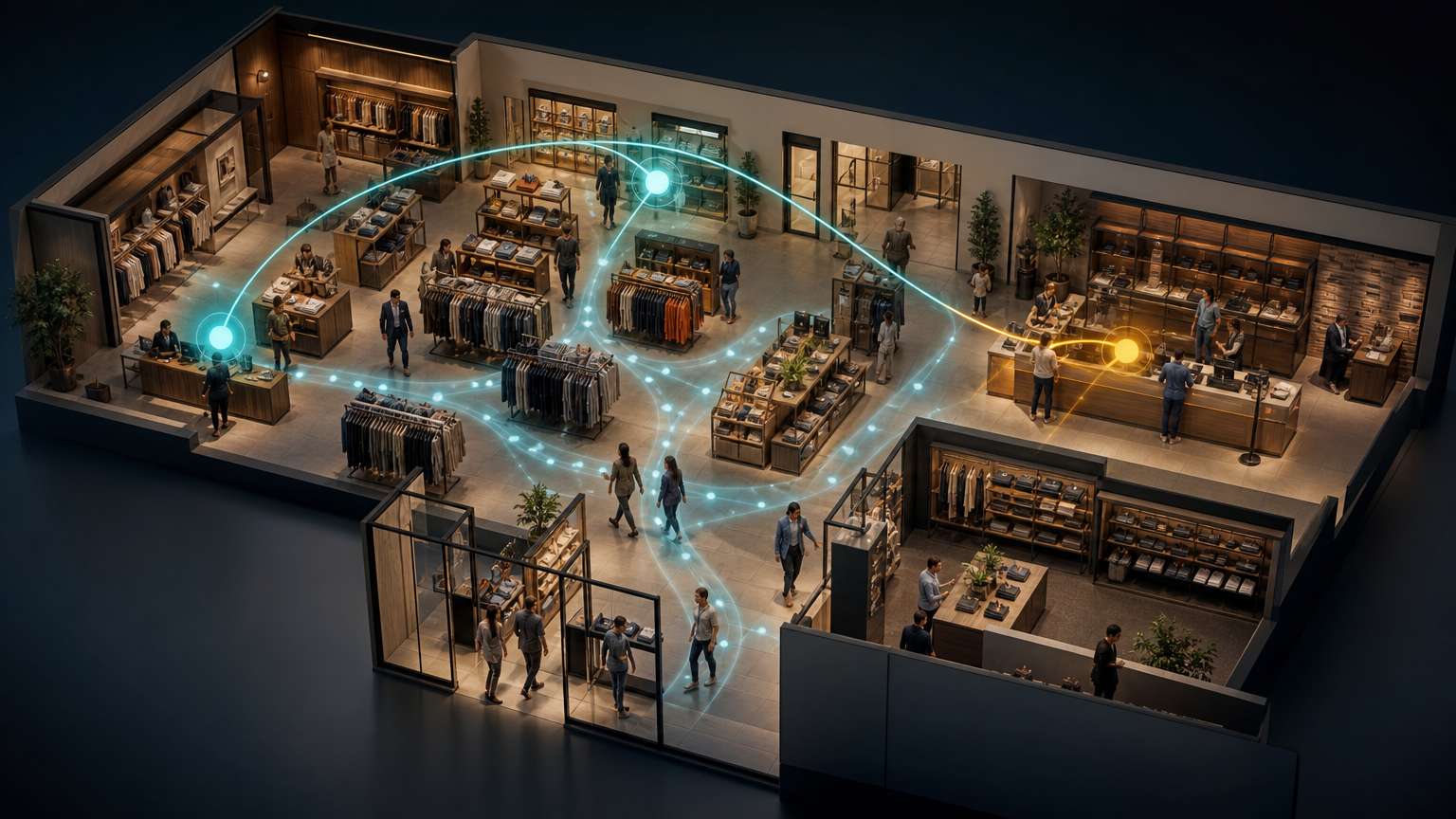
Beyond staffing and stock, AI is helping retailers rethink store layout and space allocation. Computer vision tools, including those offered by Trax Retail, analyse in-store movement patterns to show which areas attract attention and which are consistently bypassed. This insight allows merchandising teams to test layout changes with data rather than intuition, adjusting product placement to genuinely reflect how customers move through a space.
For multi-site retailers, this becomes even more powerful. Instead of applying a single national strategy, AI allows resource planning to be tailored store by store, recognising that footfall patterns in a city centre branch look nothing like those in a suburban retail park.
Executive Considerations
For business leaders, the appeal of AI in resource planning is not novelty but measurable efficiency. Better forecasting means leaner operations, improved customer satisfaction and a workforce that is neither overstretched nor underutilised. It also means finance teams can plan budgets with more confidence, since labour and inventory costs become easier to predict.
However, AI tools are only as good as the data feeding them. Retailers need clean, consistent footfall and sales data, along with a willingness to let predictive models genuinely inform decisions rather than sit alongside old habits. Integration with existing point of sale and workforce systems is equally important, as fragmented data tends to blunt the accuracy of any model.
Looking Ahead
The retailers gaining the most from AI are not necessarily those with the biggest budgets, but those willing to treat footfall data as a strategic asset rather than a background metric. As these tools become more accessible, even mid-sized retailers can start applying the same principles once reserved for major chains.
Smarter footfall analysis, paired with the right planning tools, is steadily proving that stronger sales begin with better preparation, not bigger guesses.