
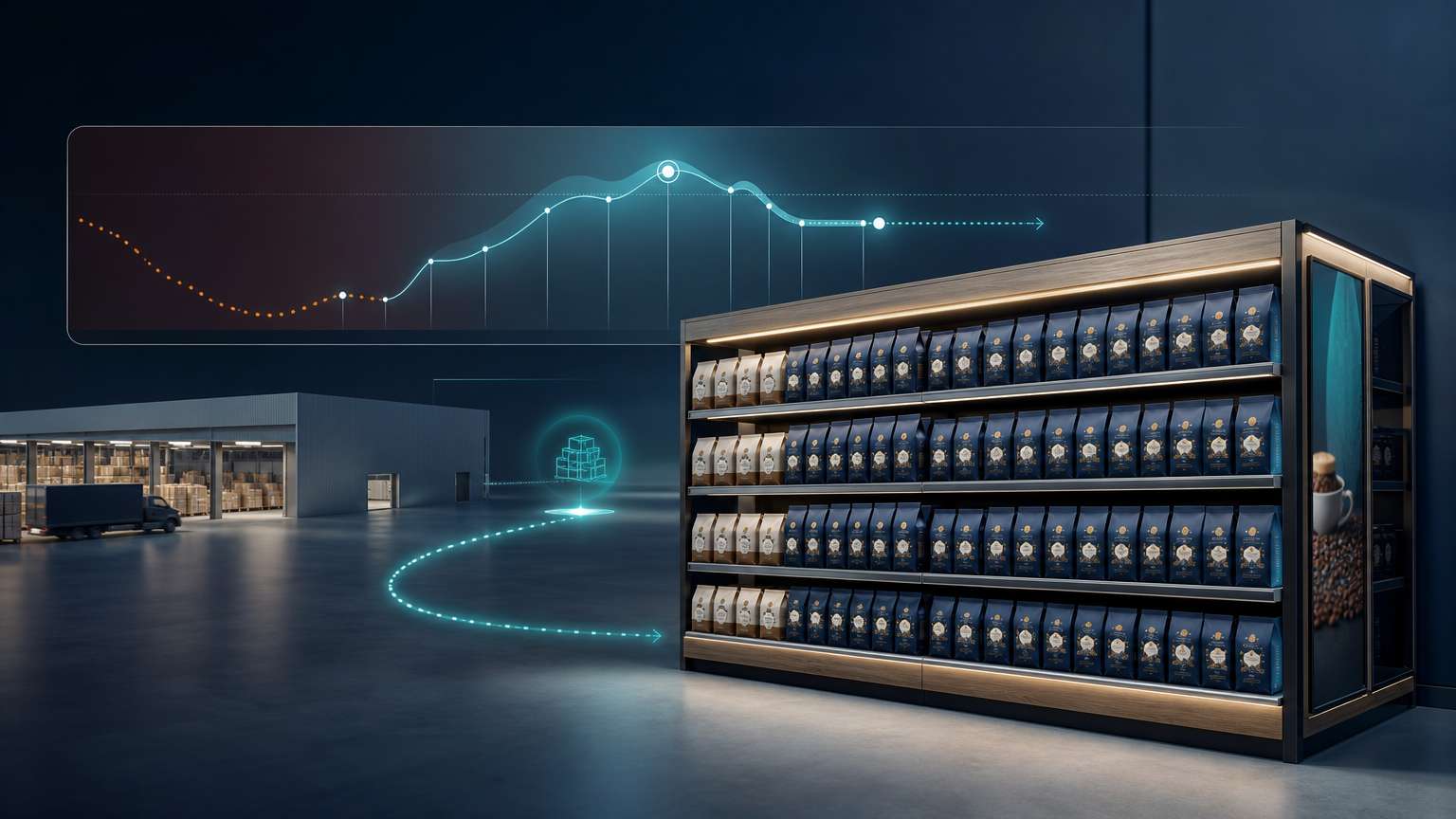
Few things frustrate customers more than finding an empty shelf or an “out of stock” label online. For businesses, the damage runs deeper than a missed sale. Studies by IHL Group have long estimated that stockouts cost global retailers hundreds of billions of pounds annually in lost revenue, not including the long term damage to customer loyalty and brand trust.
Why Traditional Forecasting Falls Short
Traditionally, businesses have relied on static reorder points, historical averages and gut instinct to manage inventory. These methods struggle with the complexity of modern retail, where demand can shift overnight due to weather, social media trends or local events. This is where artificial intelligence is changing the economics of stock availability, turning guesswork into precision.
Conventional inventory systems often use simple moving averages or seasonal indices. These work reasonably well in stable markets but fail when faced with sudden demand spikes, supply disruptions or promotional campaigns. A single missed signal, such as a competitor's price cut or a viral social post, can leave shelves empty for days before anyone notices.
The result is a frustrating cycle. Businesses either overstock to avoid shortages, tying up capital and warehouse space, or understock and lose sales. Both scenarios erode margins and customer satisfaction.
AI is changing the economics of stock availability, turning guesswork into precision.
How AI Changes the Equation
Machine learning models can ingest far more variables than traditional systems, including weather patterns, local events, website traffic, social sentiment and supplier lead times. By continuously learning from new data, these models adjust forecasts in near real time rather than relying on monthly or quarterly reviews.
Tools such as Blue Yonder, o9 Solutions and SAP Integrated Business Planning already use AI to help large retailers and manufacturers predict demand more accurately. For example, Blue Yonder's platform has been used by companies like Morrisons to improve forecasting accuracy and reduce waste, while also helping maintain better stock availability across stores.
Smaller businesses are not left out. Platforms like Shopify now offer AI powered inventory forecasting features that flag potential stockouts weeks in advance, giving merchants time to reorder or adjust marketing campaigns accordingly.
Smarter Replenishment, Not Just Smarter Prediction
Forecasting is only half the story. AI is also improving replenishment logic itself. Instead of fixed reorder thresholds, dynamic systems calculate optimal order quantities based on real time sales velocity, supplier reliability and even transport delays.
Amazon's fulfilment network is a well known example. Its AI driven inventory placement system predicts which products are likely to be needed in which warehouse, reducing shipping times and the risk of regional stockouts. While few businesses operate at Amazon's scale, similar logic is now available through platforms like NetSuite and Microsoft Dynamics 365, which integrate AI based demand sensing into their inventory modules.
The Human Element Still Matters
It is tempting to view AI as a complete replacement for human judgement, but the most successful implementations pair algorithmic precision with experienced oversight. Category managers and planners still need to validate AI recommendations, particularly during unusual events such as supply chain disruptions or new product launches where historical data may not apply.
This collaborative approach, often called “human-in-the-loop” forecasting, tends to outperform fully automated systems in volatile conditions, according to supply chain research from Gartner.
A Measurable Return on Investment
The economic case for AI driven stock management is becoming clearer. Retailers adopting predictive analytics have reported measurable improvements in on-shelf availability and inventory turnover, according to data published by McKinsey. While exact figures vary by sector, the broader trend points to fewer lost sales, lower holding costs and improved customer satisfaction.
For executives evaluating where to invest next in digital transformation, stock availability offers a rare combination of clear financial upside and customer facing impact.
Looking Ahead
As AI models become more sophisticated and data integration across supply chains improves, the gap between demand and supply will continue to narrow. Businesses that invest early in these capabilities are likely to build a lasting advantage, not just in reducing stockouts, but in building the kind of reliability that keeps customers coming back.
The shelf may never be perfectly full, but with AI, it can certainly be a lot closer to it.